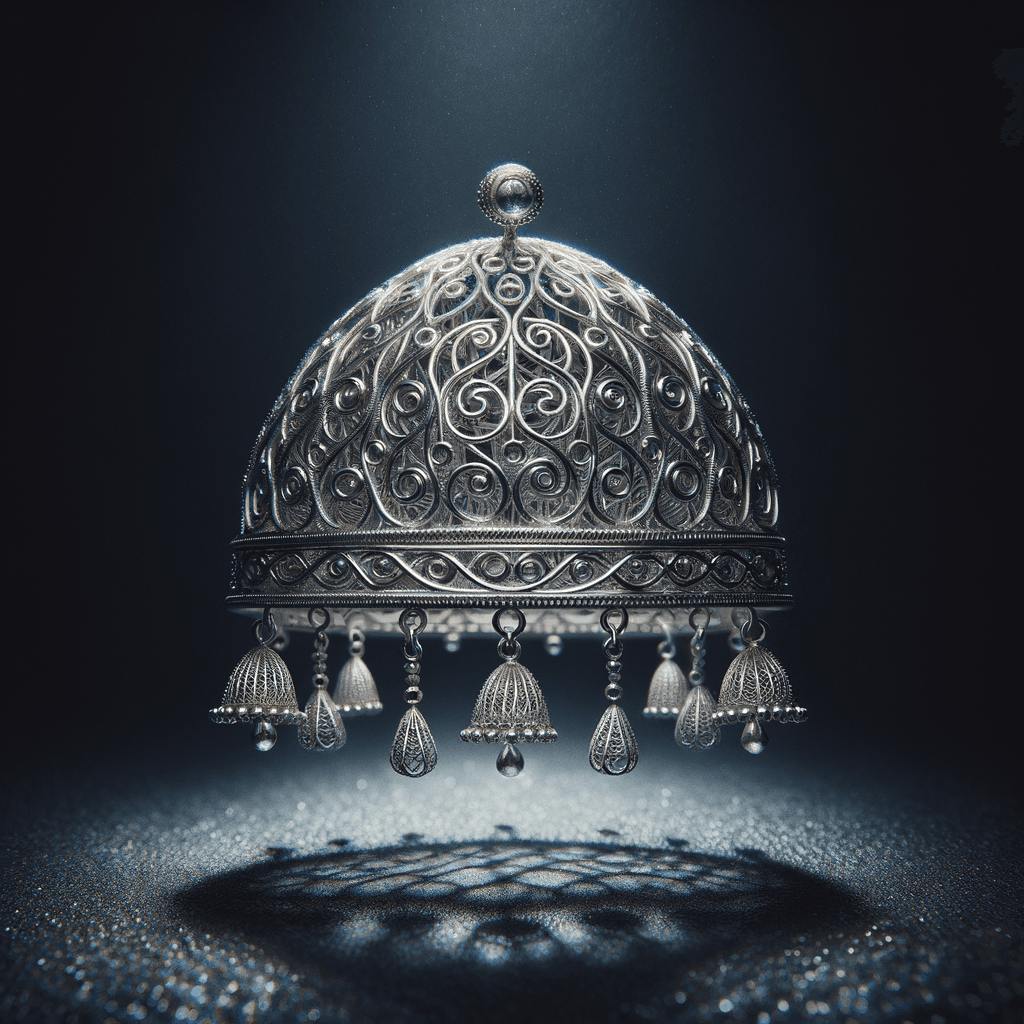
The jumka is older than most of the nations that exist today. It has been worn through empires, through invasions, through centuries of change — and it has survived all of them. Not because it was protected or preserved in a museum, but because women kept choosing to wear it.
The earliest known ear ornaments resembling the jumka appear in temple sculptures from the first millennium CE. The chandelier form — a dome body with drops below — is depicted in carvings at Khajuraho, Belur, and the Hoysala temples of Karnataka, where apsaras and devadasis wear recognisably familiar earrings.
The name itself comes from the Sanskrit jhummaka or the Persian-Arabic jhumka — the root suggesting the tinkling sound the drops make when they move. Before it had a shape, it had a sound.
The Mughal period transformed Indian jewellery in ways that are still visible today. The Mughals brought Persian craftsmen and techniques — kundan setting, meenakari enamel, polki diamonds — and grafted them onto existing Indian traditions. The result was a synthesis that became the classical vocabulary of North Indian jewellery.
The Mughal court's influence on the jumka was decisive. The layered, ornate Hyderabadi style — with its multiple tiers of kundan drops — is directly descended from Mughal aesthetics. Court paintings from the 17th century show queens and noblewomen wearing earrings that would not look out of place today.
As Mughal power declined and regional kingdoms asserted their identity, Indian jewellery diverged. Rajput courts in Rajasthan developed meenakari into an art of extraordinary colour. Bengali craftsmen refined filigree into something ethereal. Kashmiri silversmiths drew their tradition from Persian miniatures and the patterns of their own landscape.
This divergence is what gives Indian jewellery its richness. The jumka became not one thing but many — the same archetype expressing itself in four different voices, four different materials, four different relationships with the body.
In 1966, the Hindi film Meraa Saaya gave the jumka a song. Jhanak jhanak tum chalo — the sound of the earring as a metaphor for the woman's presence, her movement, her power over the room she enters.
The song lodged itself permanently in the Indian imagination. It made explicit what women had always known: the jumka is not merely decorative. It is acoustic. It announces. It persists in the ear after the woman has left the room.
The jumka is experiencing a renaissance. A generation of Indian women who grew up between cultures — between traditional dress and Western fashion, between arranged marriages and love marriages, between their mothers' Bollywood and their own — is returning to the jumka as an act of conscious choice.
They wear it with jeans. With formal blazers. With Western dresses at weddings where the bride has gone to New York but the aunties are still in Jaipur. The jumka adapts. It always has.