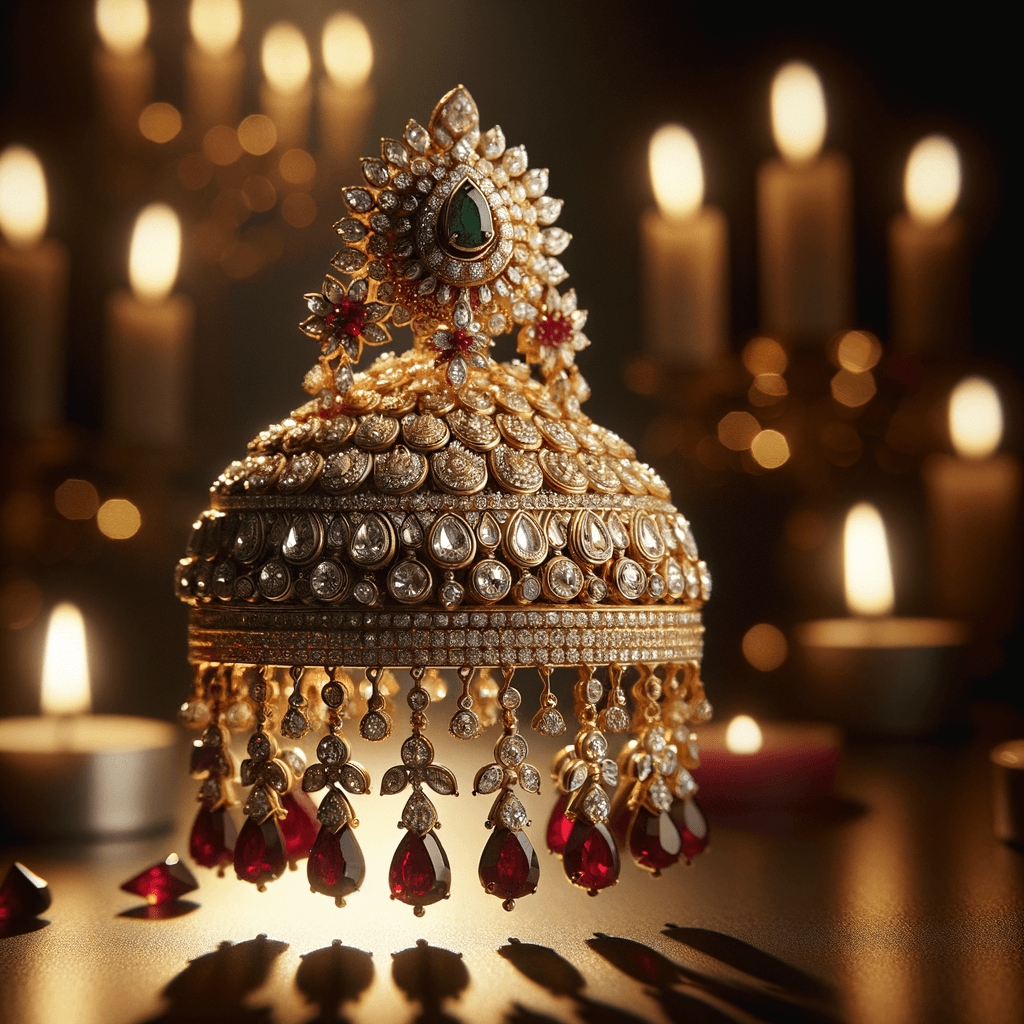
There is a hierarchy to the jumka. The one worn to a wedding is not the one worn to the office. The one worn for Diwali is not the one worn for a morning prayer. A jumka is chosen the way an outfit is chosen — with awareness of where you are going, who you are meeting, what the moment asks of you.
The bridal jumka is the heaviest she will ever wear. It is meant to be felt — the weight of a new beginning on her ears. Kundan and stone, layered drops that catch the mandap's fire. The Laila collection.
For the wedding guest, something slightly less monumental — gold, certainly, but not bridal. The Rani collection for a close family wedding. The Bahar collection if the wedding is a mehendi or sangeet — colour and movement for the dancing nights.
She fasts from sunrise to moonrise. When the moon appears, the jumka in her ear has been there since morning — gold, heavy, the one her mother-in-law placed on her ears on the morning of her wedding.
Karva Chauth asks for gold. Nothing else quite fits the gravity and joy of the occasion. The Rani collection: classic, heavy, traditional.
The festival of lights asks for colour. Not just gold — colour. Meenakari enamel in the shades the diyas throw: saffron, green, cobalt, the deep red of pomegranate seeds. The Bahar collection was made for Diwali.
Wear them with the silk kurta, the lehenga, the saree you've been saving. This is not a night for restraint.
The jumka worn to the office, to the market, to school pickup is a different thing entirely. It cannot be heavy — you will forget you are wearing it by noon. It cannot be so delicate that you are afraid to move. It must be beautiful without requiring attention.
The Chandni collection: silver filigree, light, present. The kind of earring that a woman touches once in the morning and forgets about until someone notices it.
Bharatanatyam. Kathak. Garba. The jumka worn to dance is chosen for what it does when the body moves — the swing, the sound, the flash of light between movements.
The Bahar collection moves with you. The drops are calibrated to swing at the same frequency as a dancer's steps — not designed in a factory, but learned from generations of craftsmen watching women move.
There is no wrong jumka for any occasion. There is only the question of what you want the earring to say — and whether you are listening.