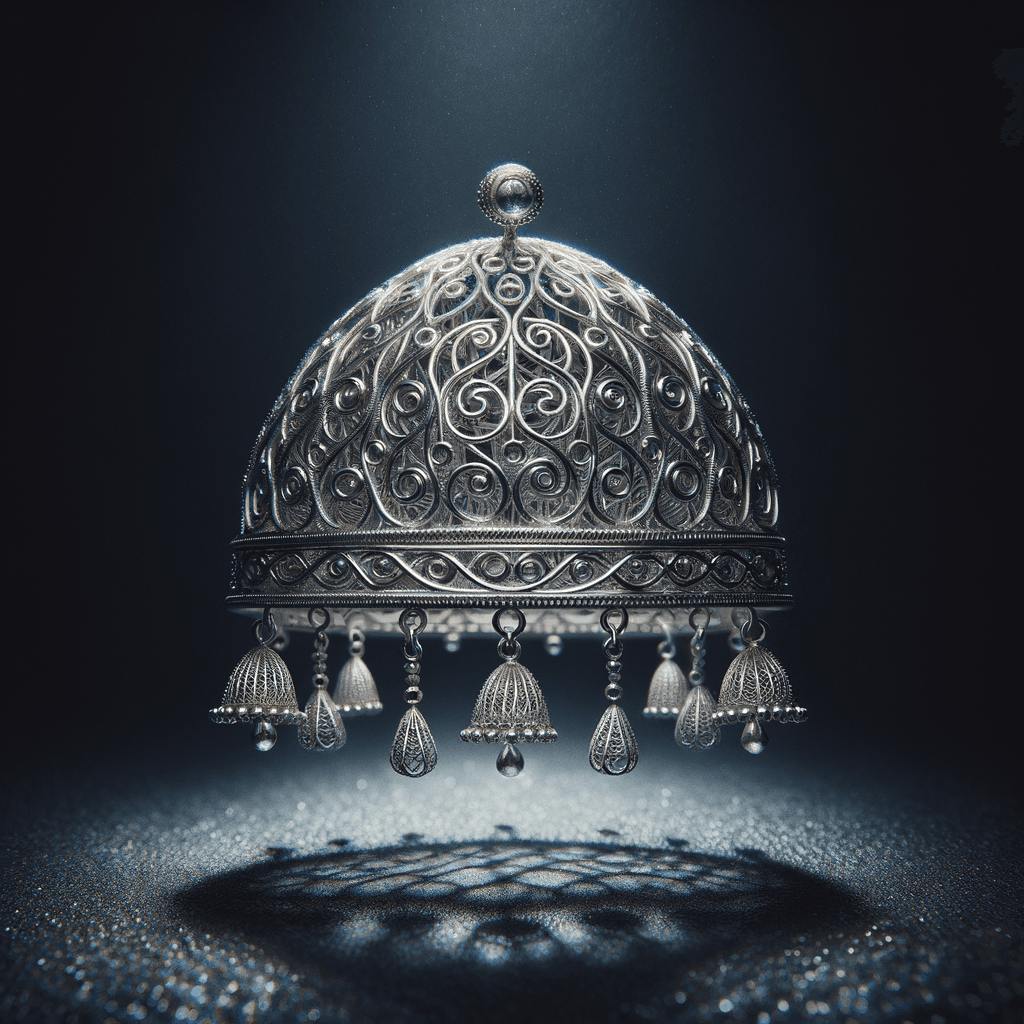
A jumka made well should last decades. The techniques used to create them — kundan setting, meenakari enamel, silver filigree — are ancient and durable. But they require care, not indifference. Here is how to look after what you have.
Gold jumkas: a soft cloth and warm water with a drop of mild soap. No chemicals, no ultrasonic cleaners. The enamel in meenakari pieces is sensitive to harsh cleaning agents — anything more than soap and water risks dulling the surface.
Silver jumkas: silver tarnishes naturally in contact with air and skin, and many women find the dark patina of oxidised silver beautiful. If you want to restore brightness, a soft cloth with a small amount of silver polish on the raised surfaces only. Do not polish into the recessed areas of filigree — the contrast between bright raised surfaces and dark recesses is part of the design.
Kundan settings: never immerse in water. Clean with a dry cloth, very gently. The foil beneath kundan stones is not adhesive — it is held by the physical pressure of the setting. Water can loosen it.
Store jumkas separately, not piled together. The drops tangle, the hooks scratch, and two heavy pairs pressing against each other over months will leave marks.
The best storage: individual small pouches in soft cloth, or a jewellery box with separate compartments. Keep them in a dry place away from direct sunlight, which fades enamel over time. If you live in a humid climate, a small silica packet in the jewellery box will prevent tarnish.
Put jewellery on after perfume and hairspray — not before. The chemicals in fragrance are hard on metals and stones.
Remove before swimming, bathing, cooking (especially with oil and steam), and sleeping. The hook of a jumka bent in sleep is a minor repair; a drop broken off because it caught on a pillow is a harder one.
If the hook of a gold jumka bends slightly, a jeweller can restore it in minutes. Do not try to bend it back yourself — gold at the gauge used for earring hooks is strong enough to resist damage but will crack if forced.
Find a jeweller who works with traditional Indian techniques — not a chain store, but a craftsman. A broken drop on a Bahar jumka, a loose kundan stone on a Laila piece, a split hook on a Chandni earring — these are all routine repairs for someone who understands how these pieces are made.
In most Indian cities, the jewellery market is the right place: the craftsmen there learned from their fathers and grandmothers, and they understand what they are working with. In other cities, ask around. The right person exists. It is worth finding them.
A well-cared-for jumka does not age. It deepens. The small scratches of a decade of wearing, the slight darkening of the silver, the way the gold develops a warmth that new gold does not have — these are not damage. They are the record of a life.